Mouldmaking - Where to Buy Antique Laid Moulds
July, 2026
I’ve been learning how to make paper over the last 6 years. The history of hand paper production, specifically the materials and techniques is of interest. Owning "antique laid" moulds in a few different sizes has been a goal of mine since I started because I'd like to make paper that I can write on with a quill and carbon ink. In addition, I'd like to draw, paint, and print on this paper. Not much to ask, is it?
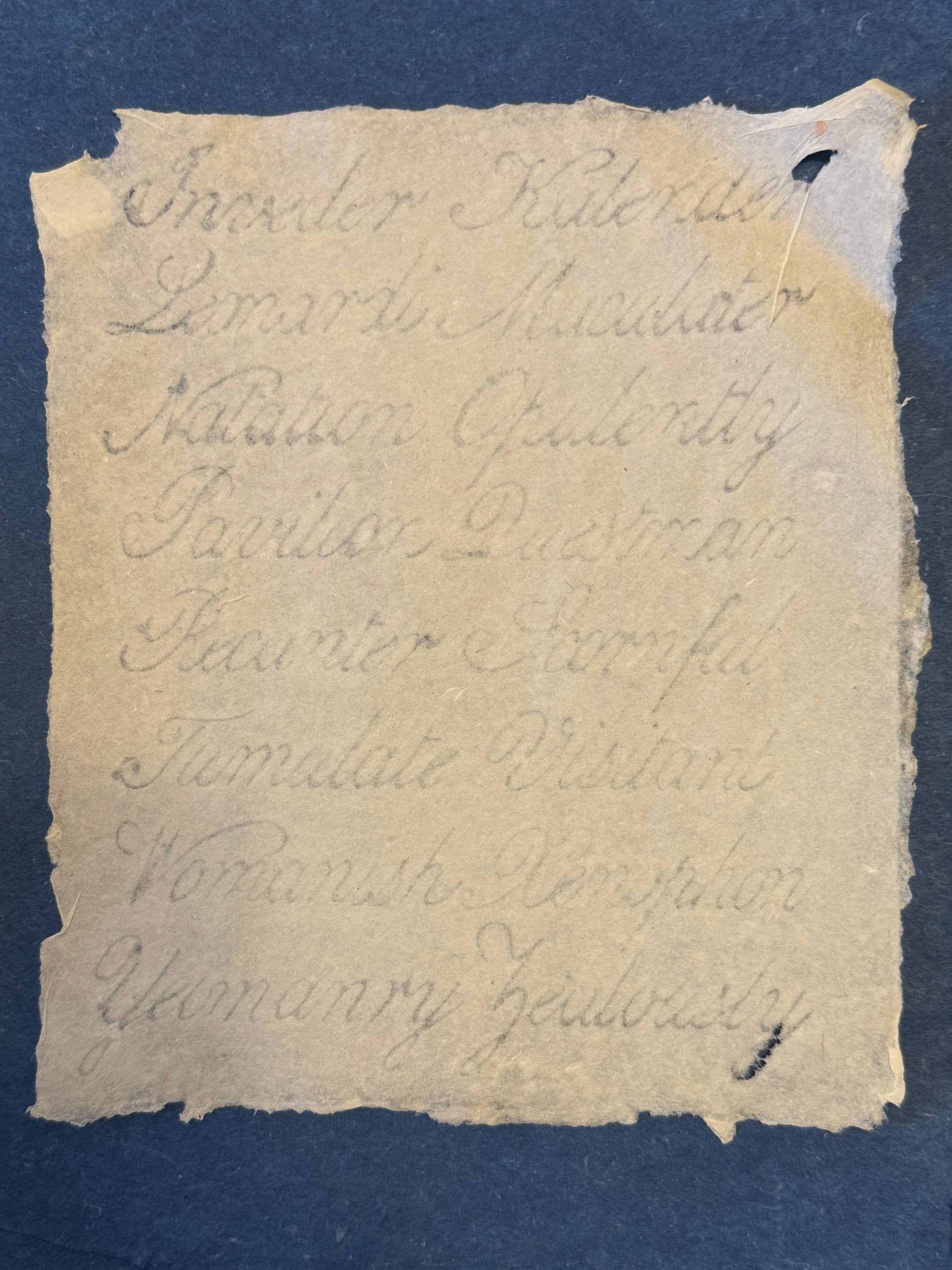
In spite of making replica Joseph Seavy's watermarked letterform paper for my chapter in Papermaker's Tears V.2, I am not very interested in making wove paper. I would rather emulate earlier papermaking craft and appearance as stated above.
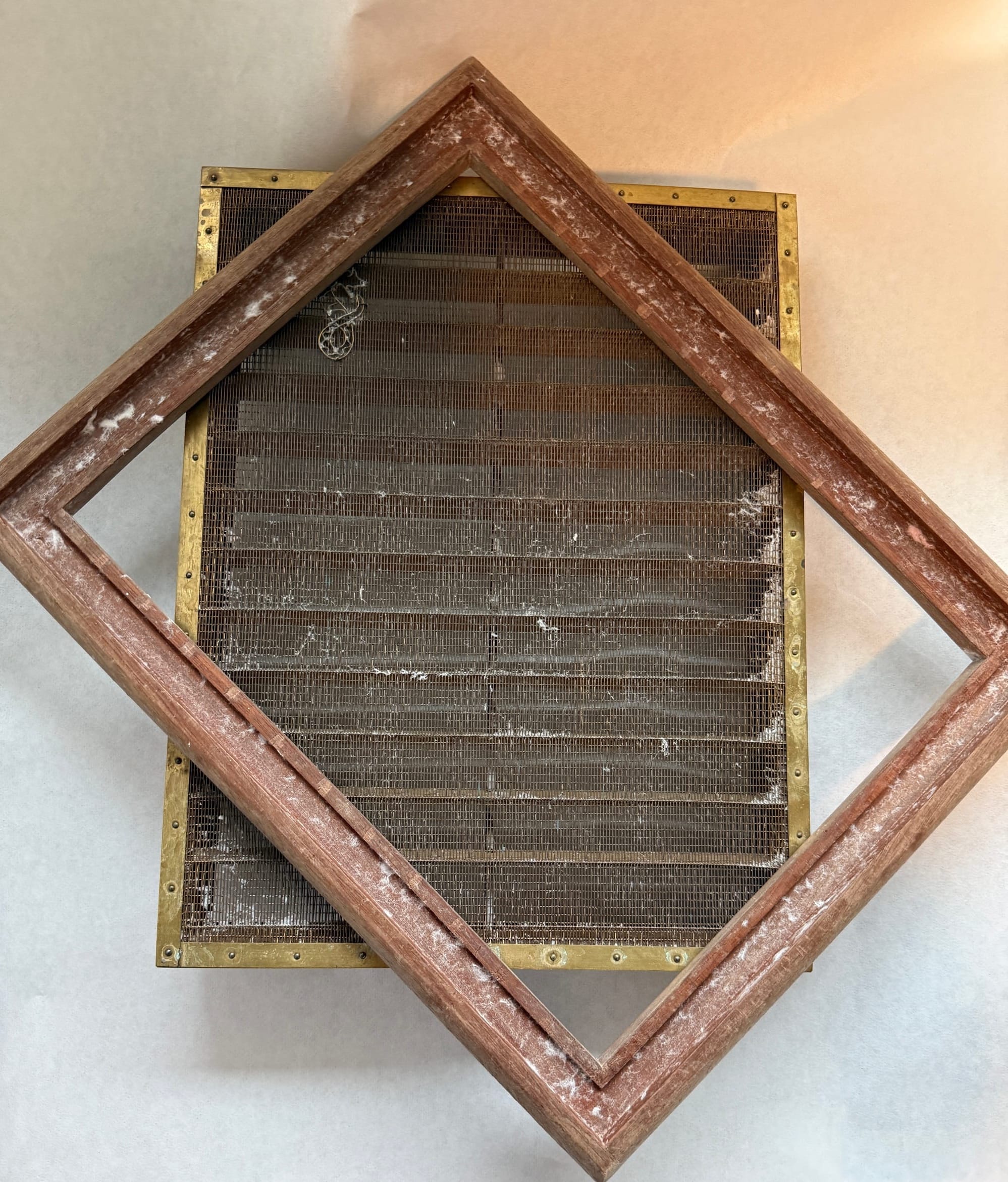
At present, I can make 9” x 12” "modern laid" paper on a mould made by Lee Scott McDonald in 1989. It’s a good mould and I like the paper I make on it, however it’s not a size large enough to make a book beyond 6" x 9". And there is no variation in show-through when the paper is seen against a light.
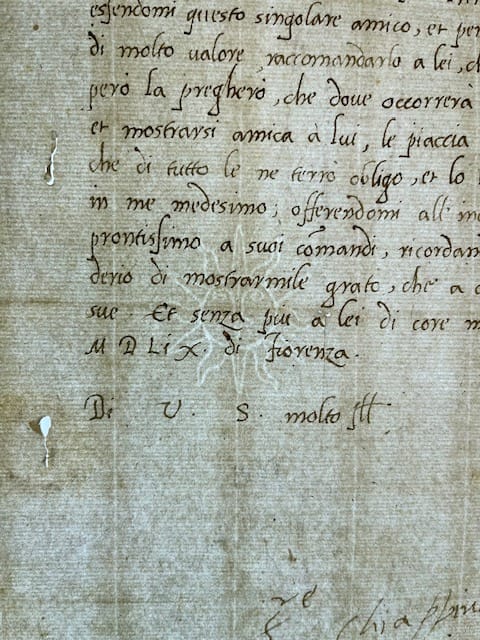
I would like to make larger sheets on an antique laid mould, however most moulds available in 2026 are made with modern materials, not wood and wire. And the wooden/wire ones that are available have modern laid, or wove covers. There are no mouldmakers that provide antique laid moulds as they have either retired or passed away.
While at CODEX this year, Heather Peters and I were kvetching that we couldn't get newly made antique laid moulds anywhere. As such, we agreed to work together to solve this problem. There are ways to get wire cloth that can serve as the mould cover, however the barrier to entry is expensive which poses a budget constraint for most hand papermakers I know. Myself included.
Hand papermakers have purchases remnants, or offcuts from dandy roll manufacturers and build moulds around those remnants. There are still industrial hand looms that make wire cloth (covers) in a few sizes and they will sell offcuts from their weaving because the mills don't always need the full length of cloth.
In talking with papermakers that Heather and I know, we established that we weren't the only ones wanting well-made moulds. We decided to put together a group purchase of the cloth, find a woodworker to make the mould and sew the cover to the mould. We want to deliver wooden moulds and deckles within six months by coordinating a distributed craft effort. If it works well, perhaps a second batch could be attempted employing lessons learned.
The parameters have 2 objectives:
1) Offer well-made antique laid moulds in a timely fashion
2) Identify craftspeople to take over mouldmaking - both woodworking and wire weaving to ensure that the craft(s) continue.
There are numerous writers on how moulds are made, and I’ll include a few notable references. As this post is fairly technical, the non-papermaker may miss something. My apologies if I get too technical. I suggest you read Timothy Barrett’s European Hand Papermaking: Traditions, Tools, and Techniques published by The Legacy Press; "Appendix C: Mould and Deckle Construction" by Timothy Moore. Aside from interesting, well-written information, it will answer many questions about mouldmaking. You will learn much more about how to make a mould by reading Tim Moore’s blog. Then, too Mould and Mouldmaker by E. G. Loeber, explores the history of mouldmaking in the West and delves into the tradition on the Continent, and not just British moulds. Finally, the just published Creating a Laid Texture with Felt Hair Marks on Renaissance-Style Sheets & Wire Surface Texture Migration From Wire-Side to Felt-Side by Donald Farnsworth and Max Thill can be found on the Magnoliapaper.com website.
September 29, 2026
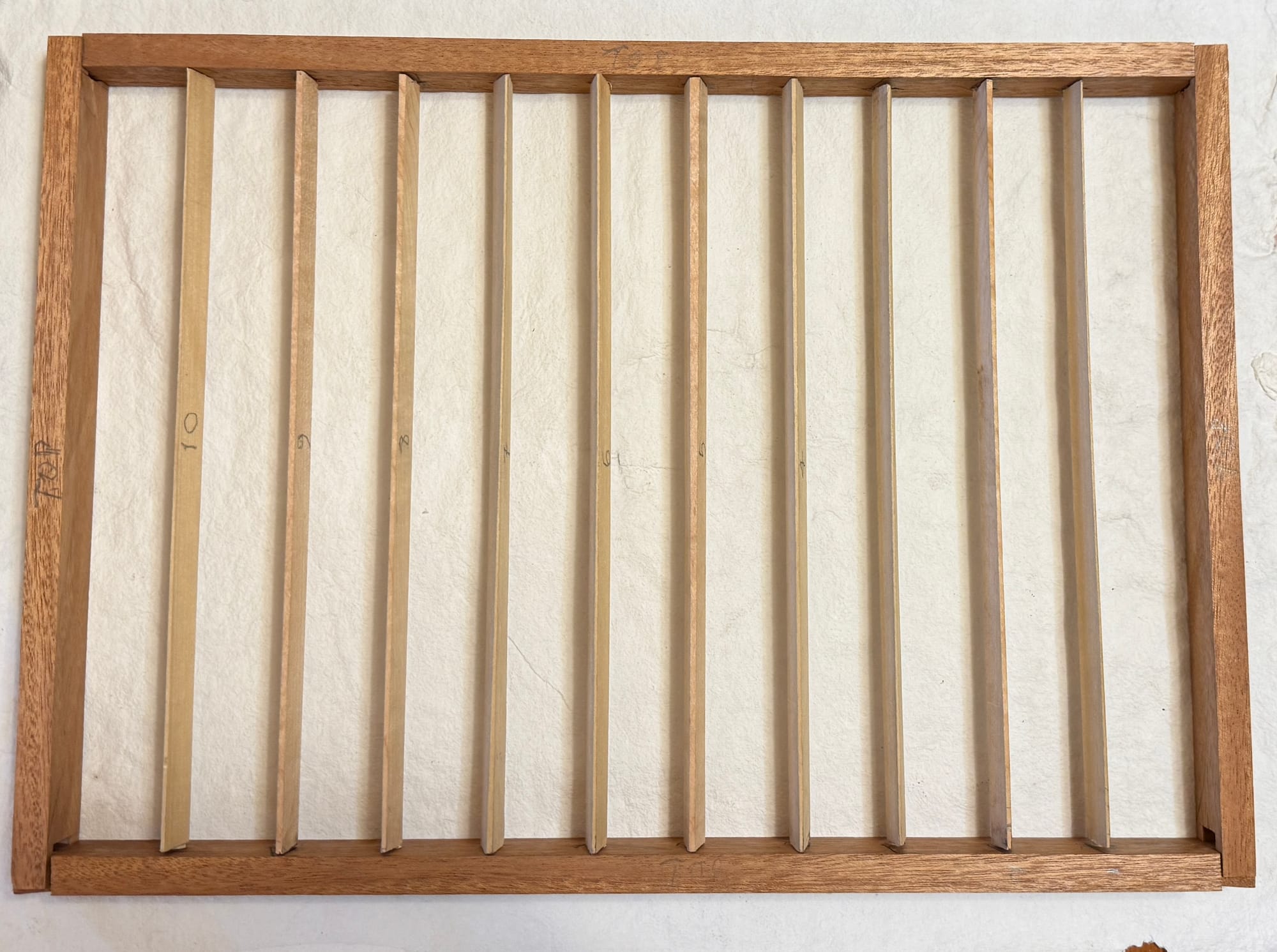
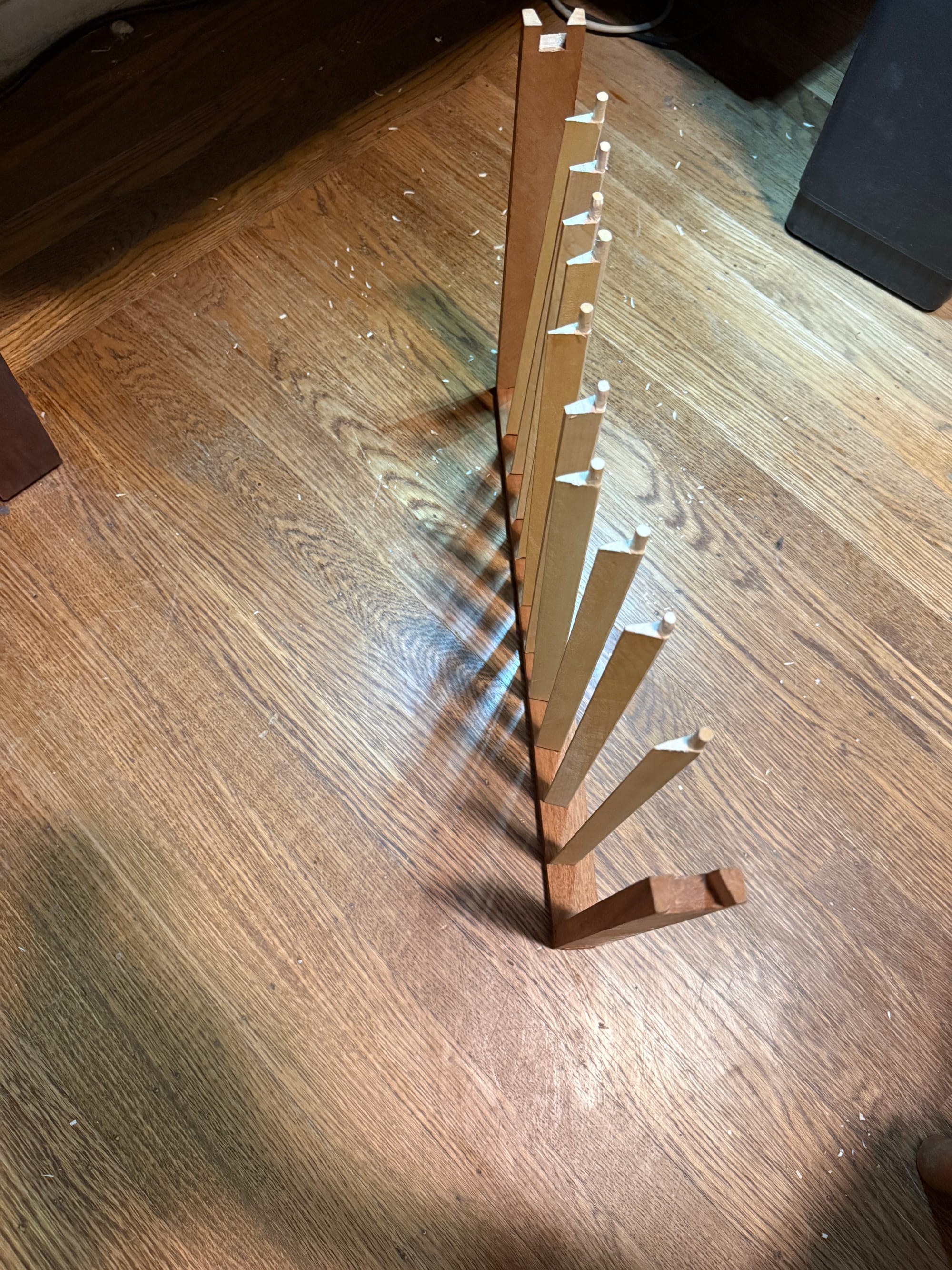
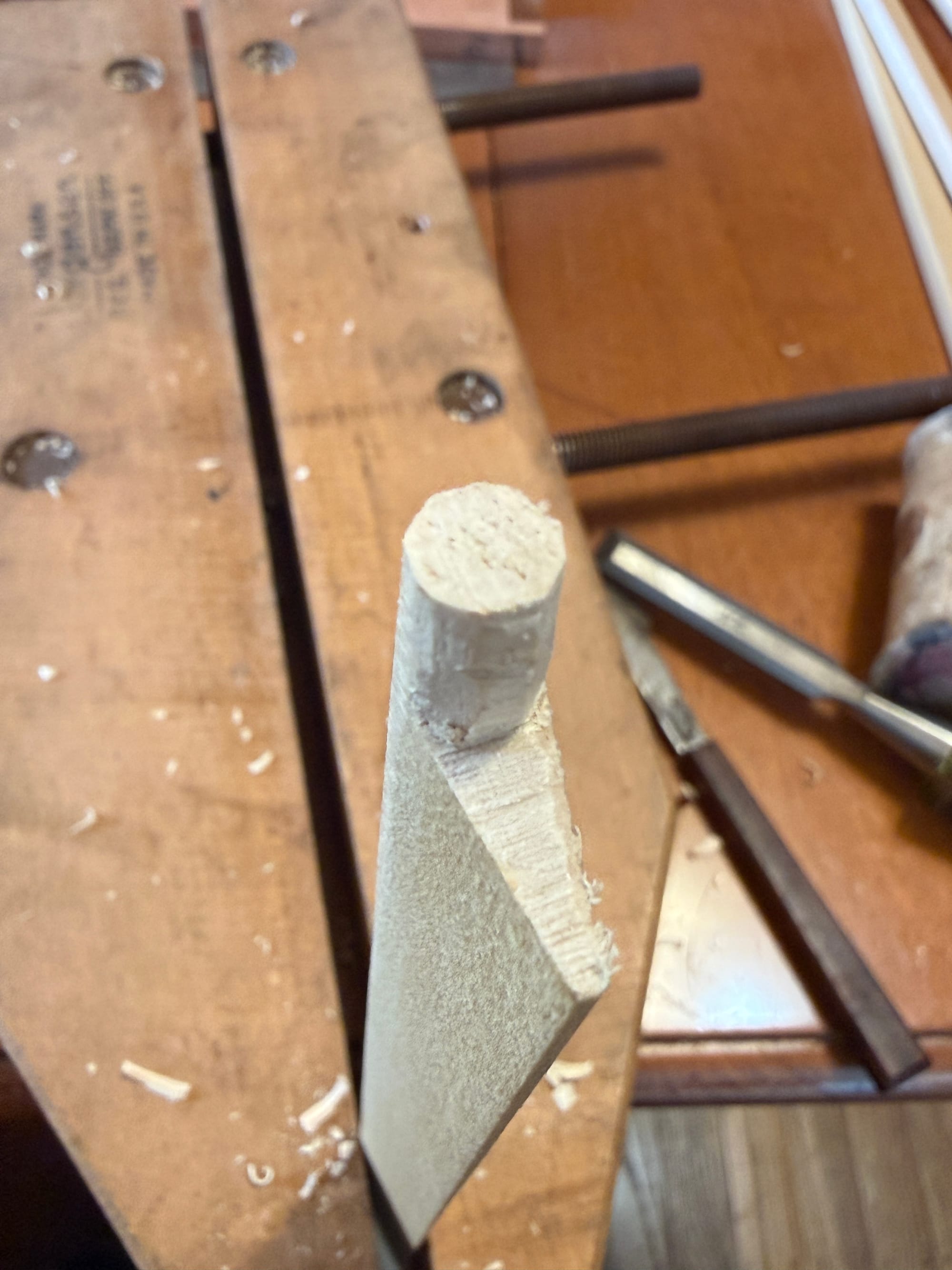
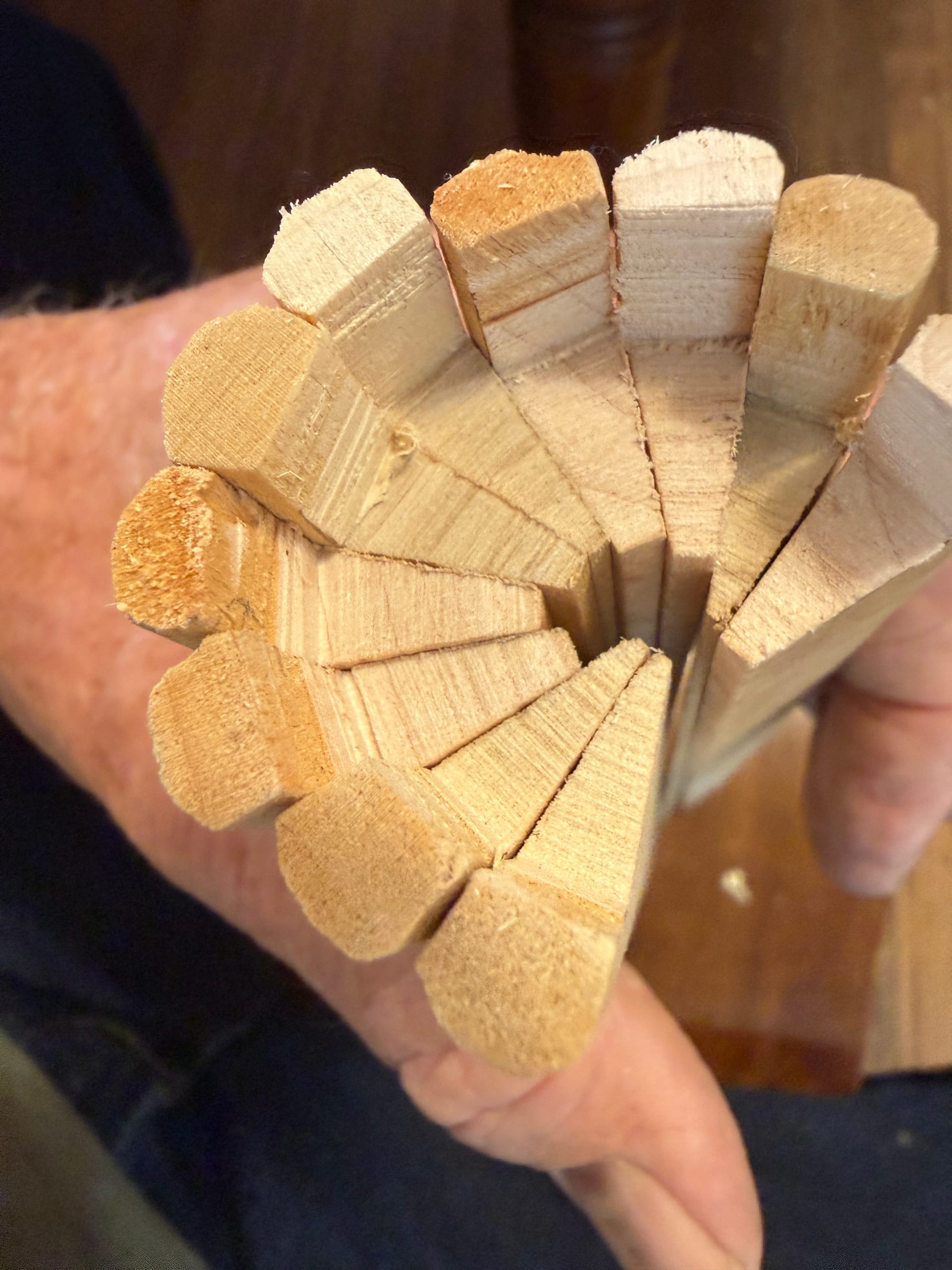
My mouldmaking attempt
Back in late July, I contacted Tim Moore, Brian Queen, Aldo (Don) Farnsworth, and a couple of other papermakers to tap the collective knowledge as a means of avoiding as many mistakes as I could. I read through Tim's blog and began to make my own mould from African mahogany that I'd purchased in 2021. Tim was enthusiastic about the project and invited me to come to Michigan, which I did in early August. I spent 4 days with Tim and his wife, artist Pati Scobey. I was treated to a perfect retreat in Albion, MI as a guest at their home and studios. Gracious hosts, the conversation was intellectually stimulating with ample doses of humor and fun. They built their house and studio decades ago and have been producing art, tools, and happiness for many years.
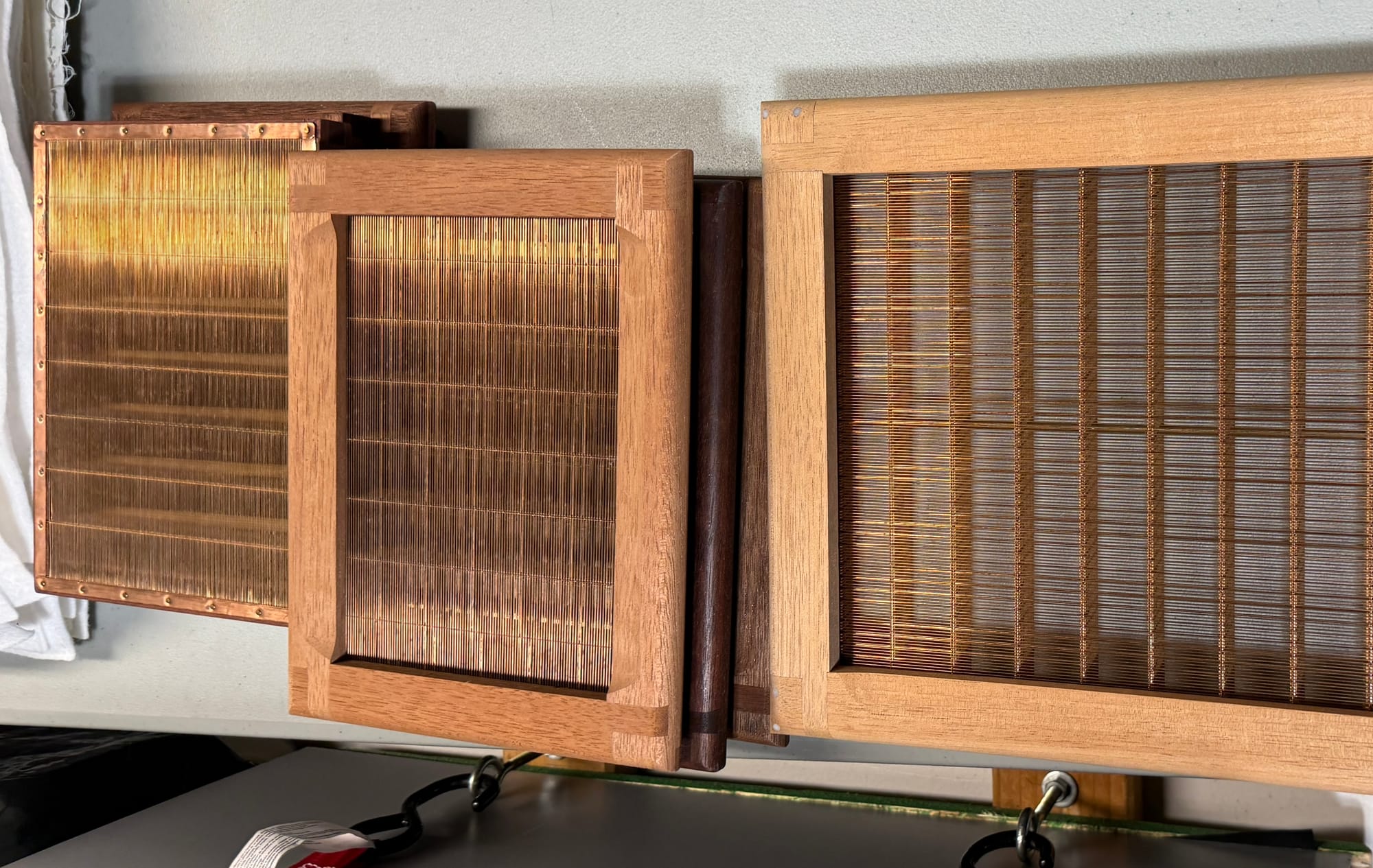
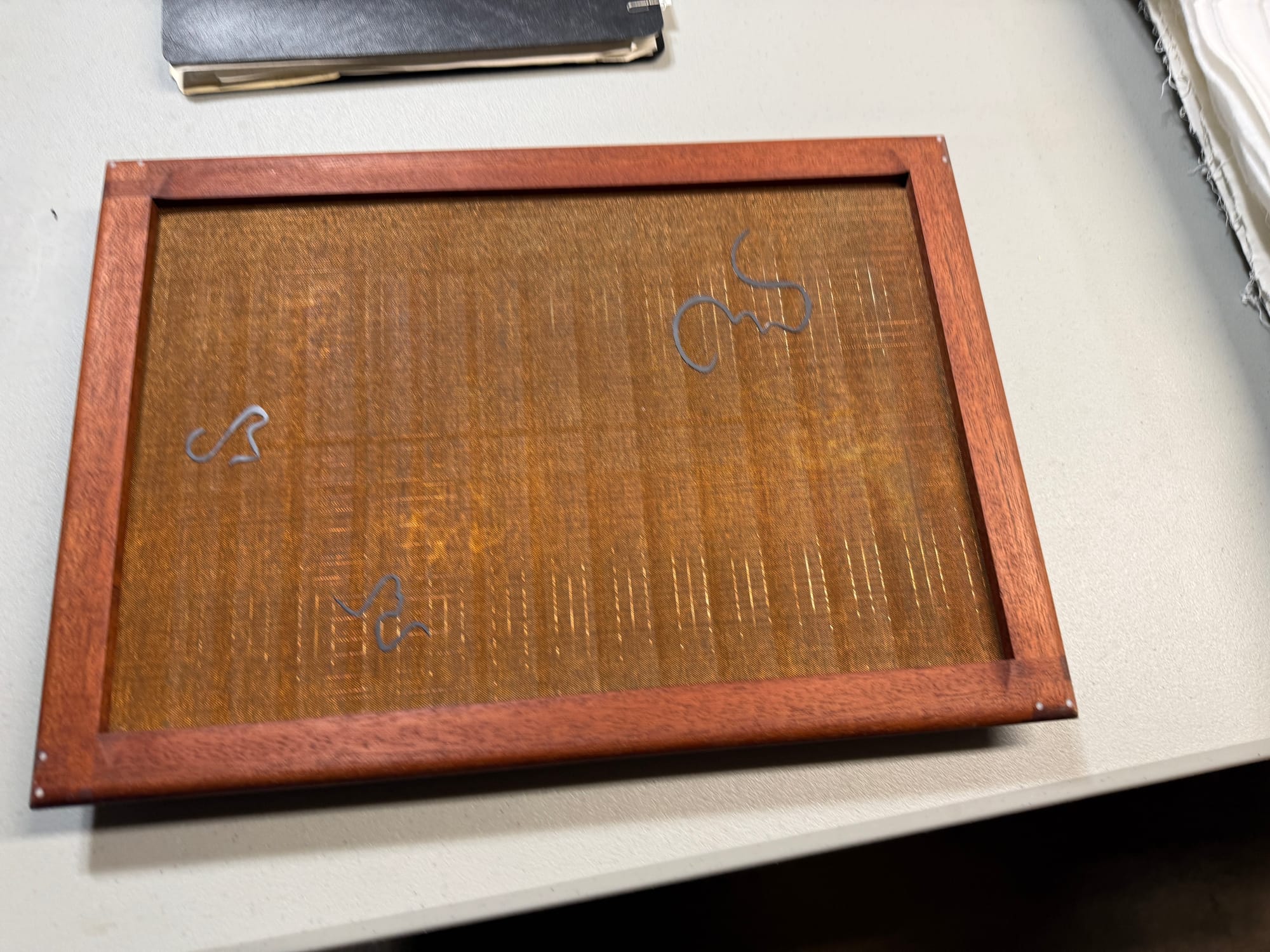
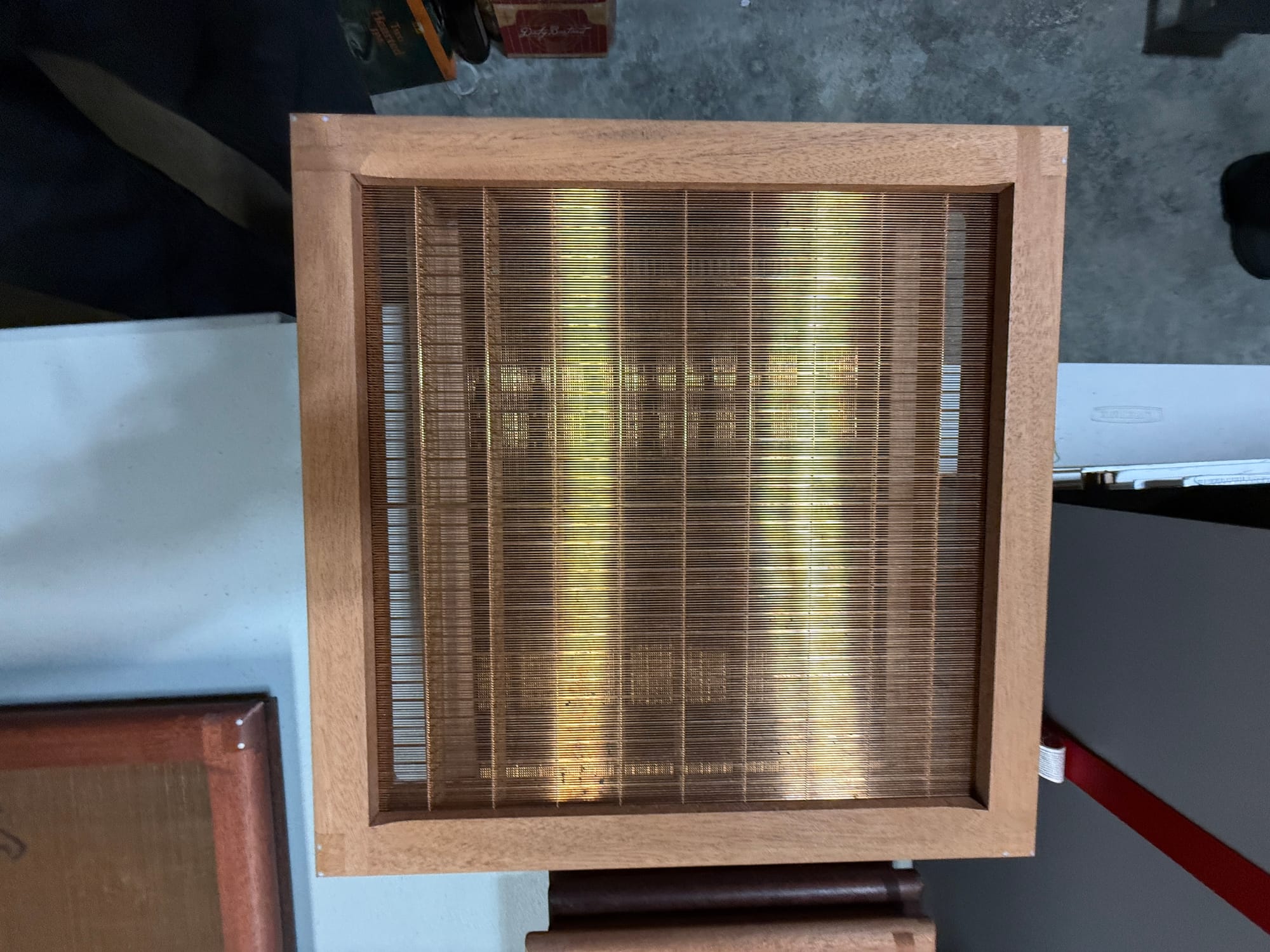
A number of moulds that Tim Moore has made for Pati Scobey over the years
Tim says that he's a wood sculptor whose pieces are tools for other artists. Not only his woodcraft, but his inventive nature combine to produce pieces that are a pleasure to view, and even more alive when one uses them. The shop and home are kept warm in the winter with a Finnish heating system. "A ton or two or three of masonry which stores up the energy from intermittent clean, fast burning fires. Very efficient, comfortable, safe way to heat with wood used for several centuries in northern Europe. Heavy, brick things in the more northern climes (Russia, Finland) and beautiful tile stoves in Germany and Austria and other nearby places. Ours are the former kind. Many of the iron parts of the brick stoves were made in Finland and the little soapstone one was entirely made there and shipped in pieces." Tim heats these buildings from local wood. No need for a gym when you cut your own fuel for staying warm!
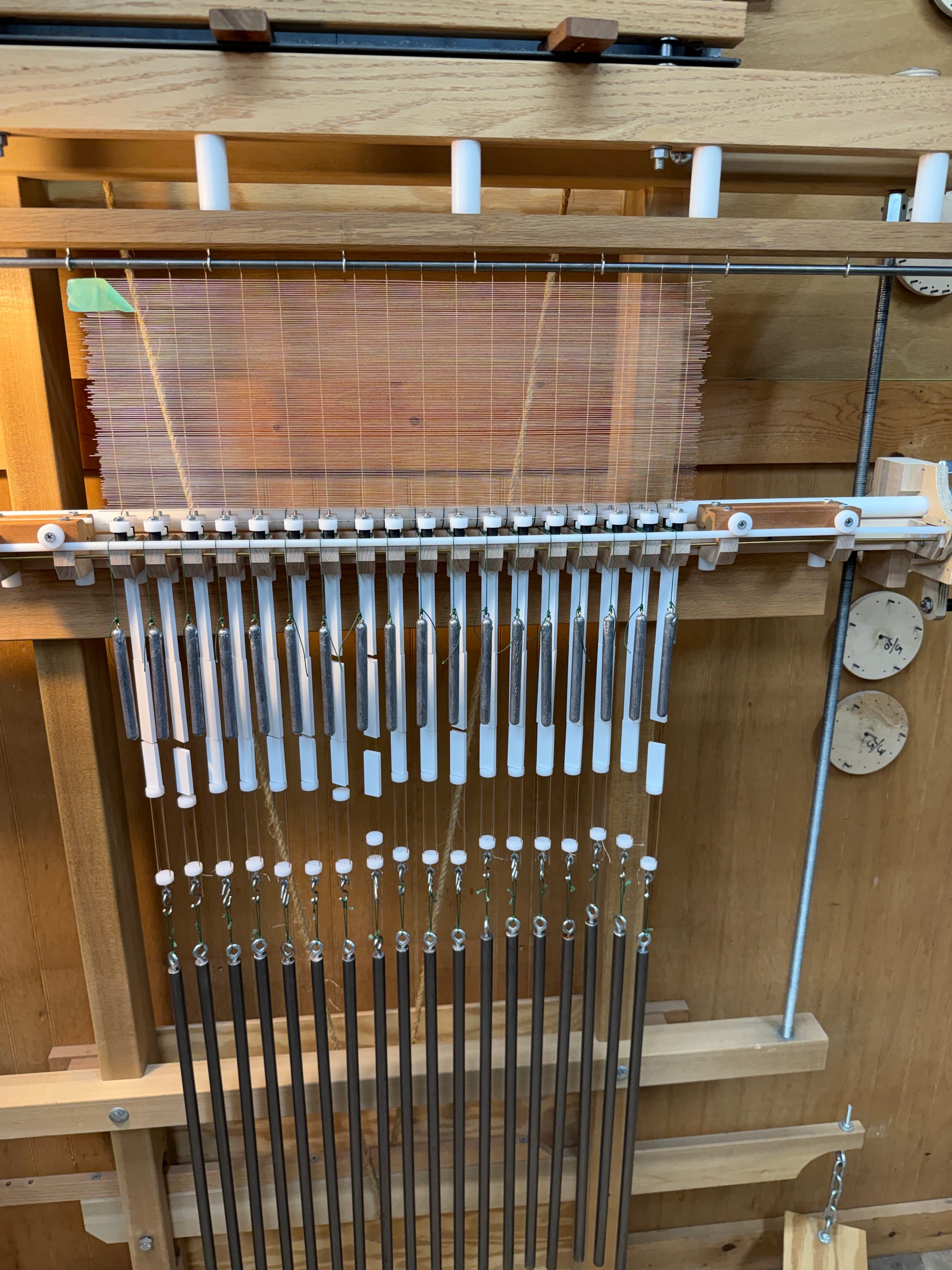
In addition to Tim's desire to figure out how to make the machines that make craft tools, he wants to educate people to continue his work. Tim decided to stop making moulds about 8 years ago and this has left a gap in North American made moulds. Tim has taught mouldmaking at workshops and described the loom that he uses to weave wire cloth for the covers of laid moulds. However, no one has taken him up on learning to use his loom and take over the production of woven cloth.
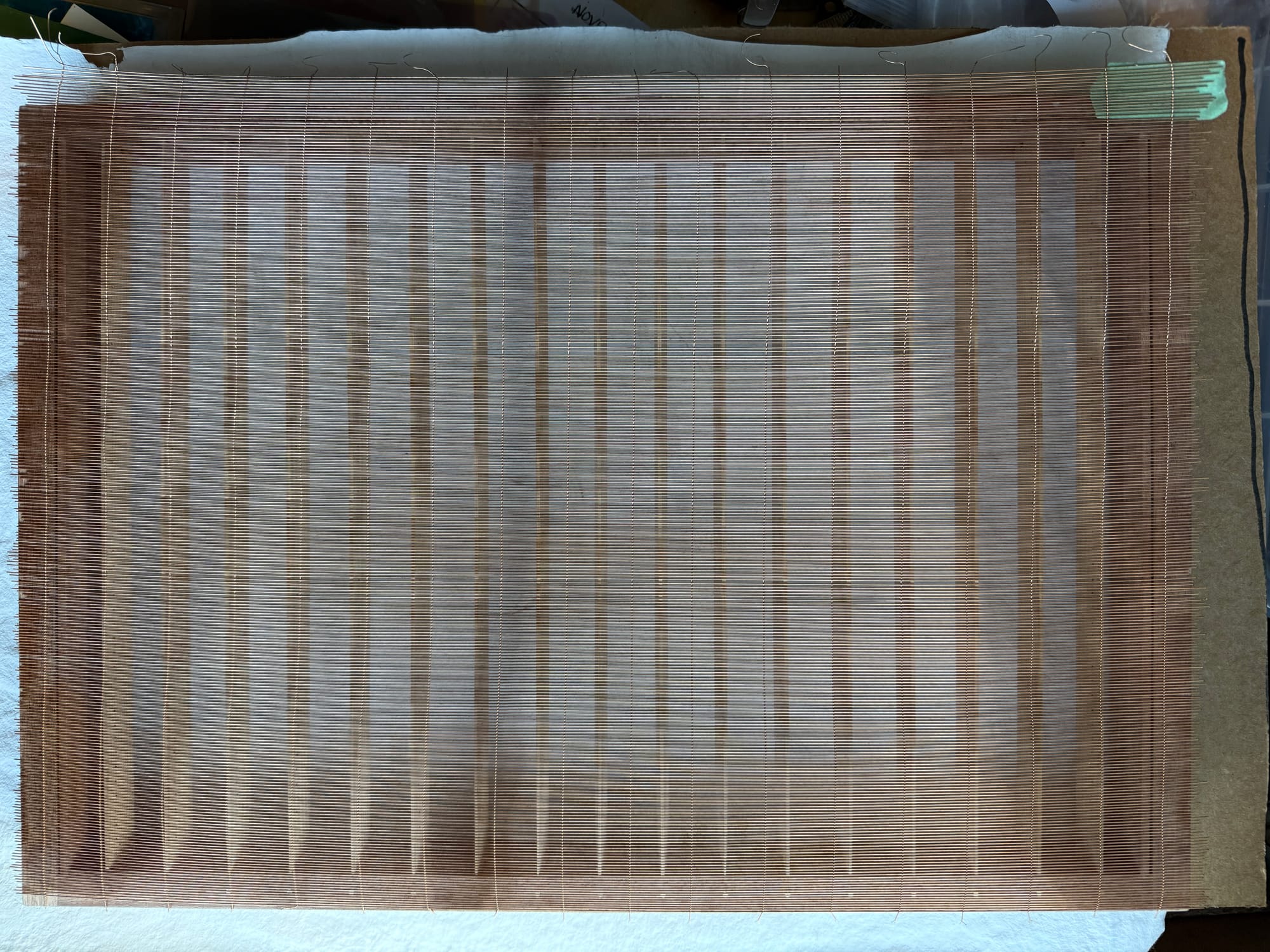
It takes either 2 craftspeople to make traditional moulds. Or one who's interested in making the woven cloth as well as doing the woodworking required. Tim has those interests, and figuring out how to make looms. The one shown above is the 7th iteration, he's always improving and rethinking his choices. Tim invited me to weave a cover for my mould and I took him up on it. Over 2 days we talked about his design choices, improvements, and the pressures of doing toolmaking on demand. I was able to learn about his process as well as the action of weaving on this loom. I had difficulty counting the number of cranks to wind up the cloth as I wove. This lead to a few misfires that meant I had to start again. (The first inch or so, covered by the green tape in the pictures above and below.)
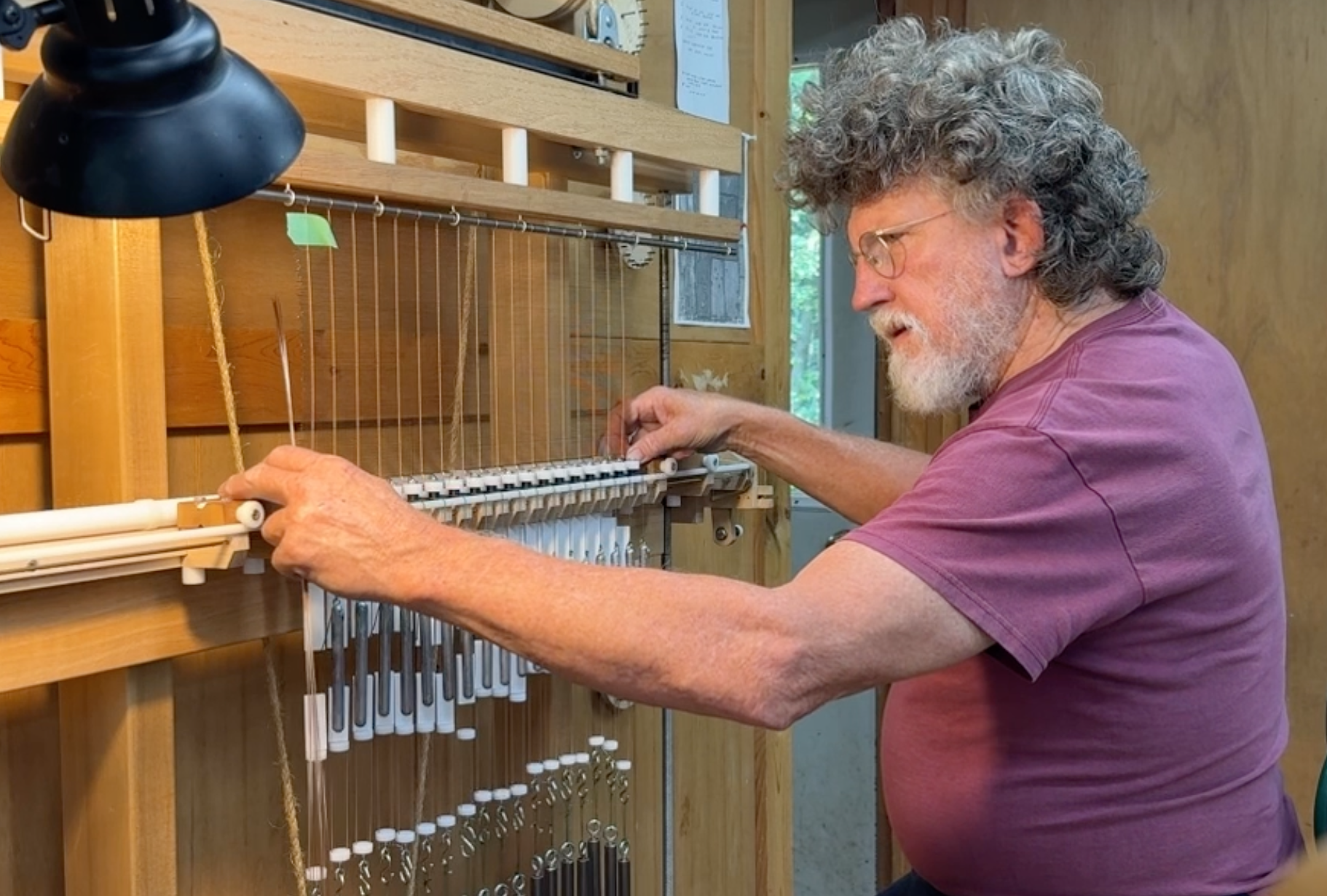
Weaving takes a patience and attention to detail that isn't suited for everyone. And weaving metal wire is a different thing than weaving a more flexible piece of fabric. Were I much younger, I might have gotten into it, but that time has passed.
Tim has built a loom and process that is pretty straightforward and relatively easy to pick up and learn. The attention to detail, ability to think through measurements, gears, and repetitive actions is required, yet none of these skills are beyond most people working today. In only a few instances could I see where there might be some automation that could enhance the speed or ease of the work. I can imagine adding a welding machine's wire feeder to automate measuring, straightening, and cutting the wire for the weft of the facing cloth.
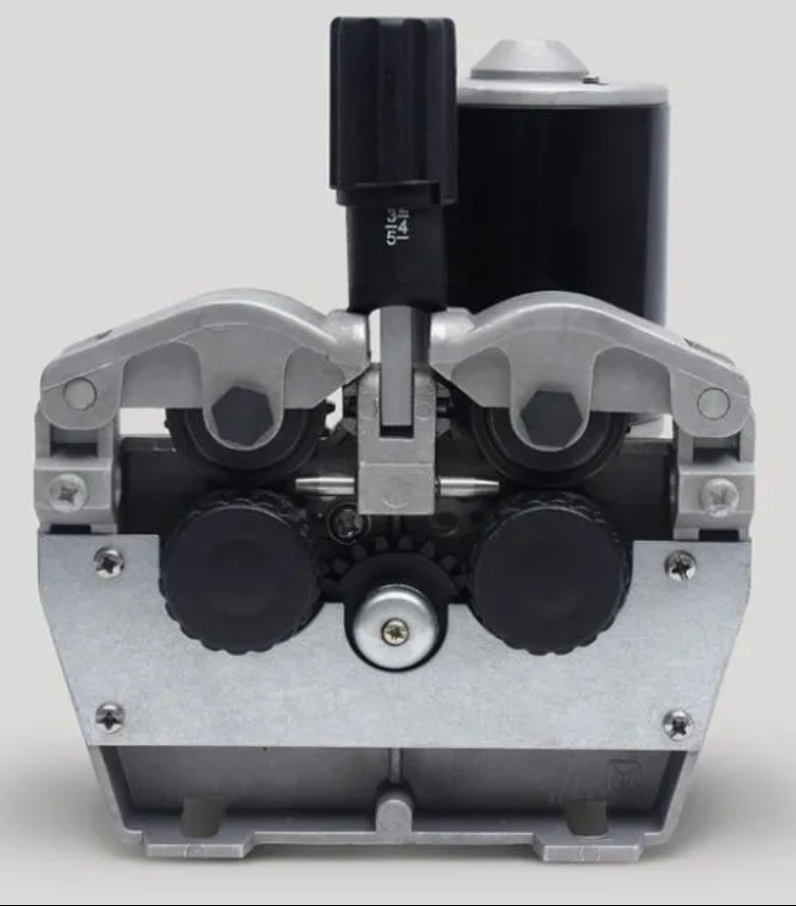
Currently, Tim pulls wire from a spool with a pair of cutters to a specific length which he then trims by hand until he's got a bundle of them. This could be set up so he hits a foot switch when he's ready for the next wire. Overall, the workflow is designed for maximizing one's time and movement.
After coming back from Tim's, I spoke with John Jarvis of Vancouver, BC. John is a talented woodworker who has been interested in making bookbinding and papermaking tools for a couple of years. They've been developing their woodworking craft and have shown their work to be of high quality and thoughtful design. We spoke for over an hour and decided that we'd work together on the project that Heather and I had discussed. Heather introduced us because she taught Ruby Lewis, John's partner, papermaking at Penland a couple of years ago. At the conclusion of our discussion, John began making me a 12" x 18" mould with 17 ribs at 26mm. I measured the distance for the ribs based on the chain lines of the cloth that I had woven at Tim's. However, my dyslexia struck again - it's 28mm, not 26!
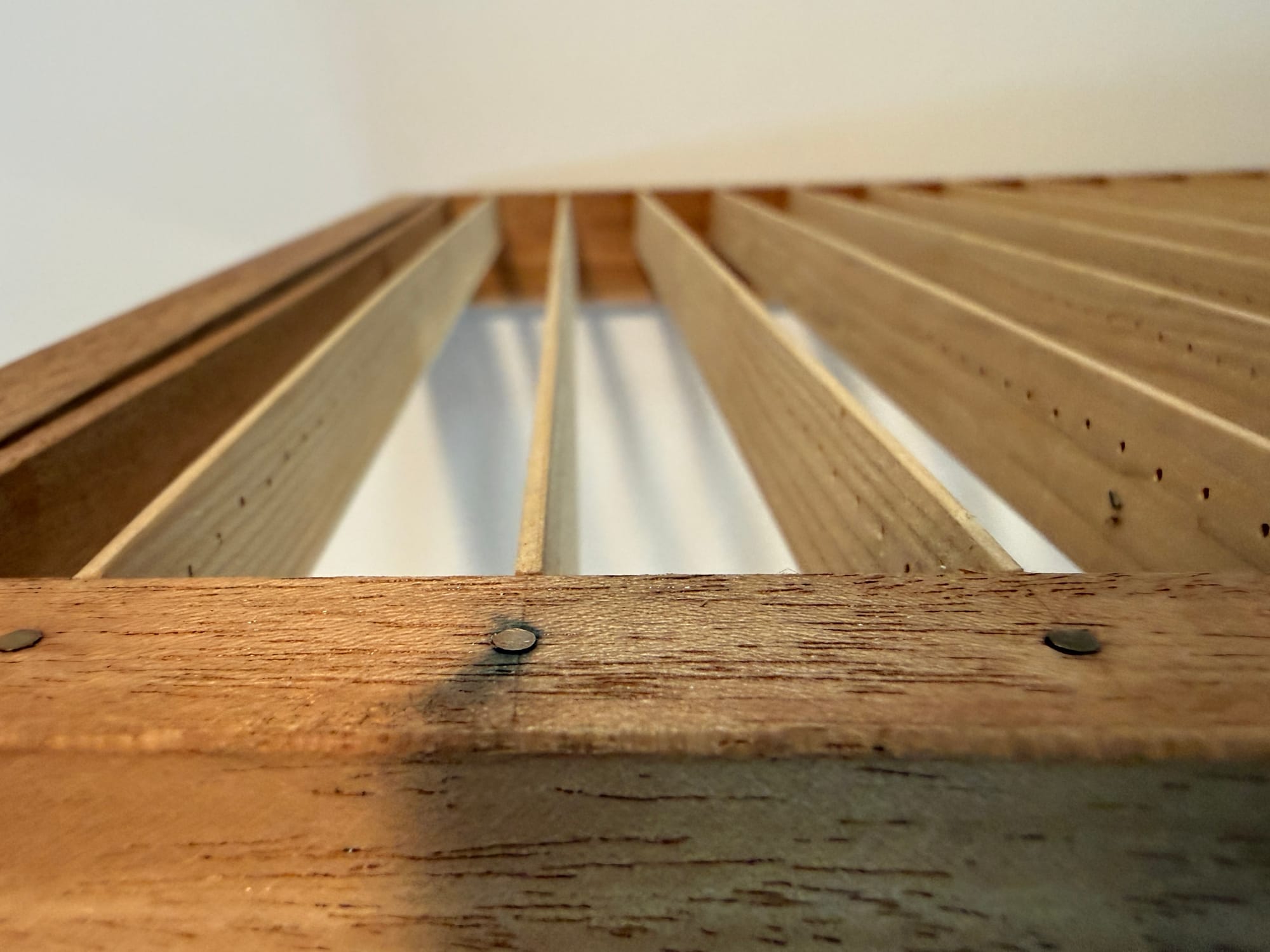
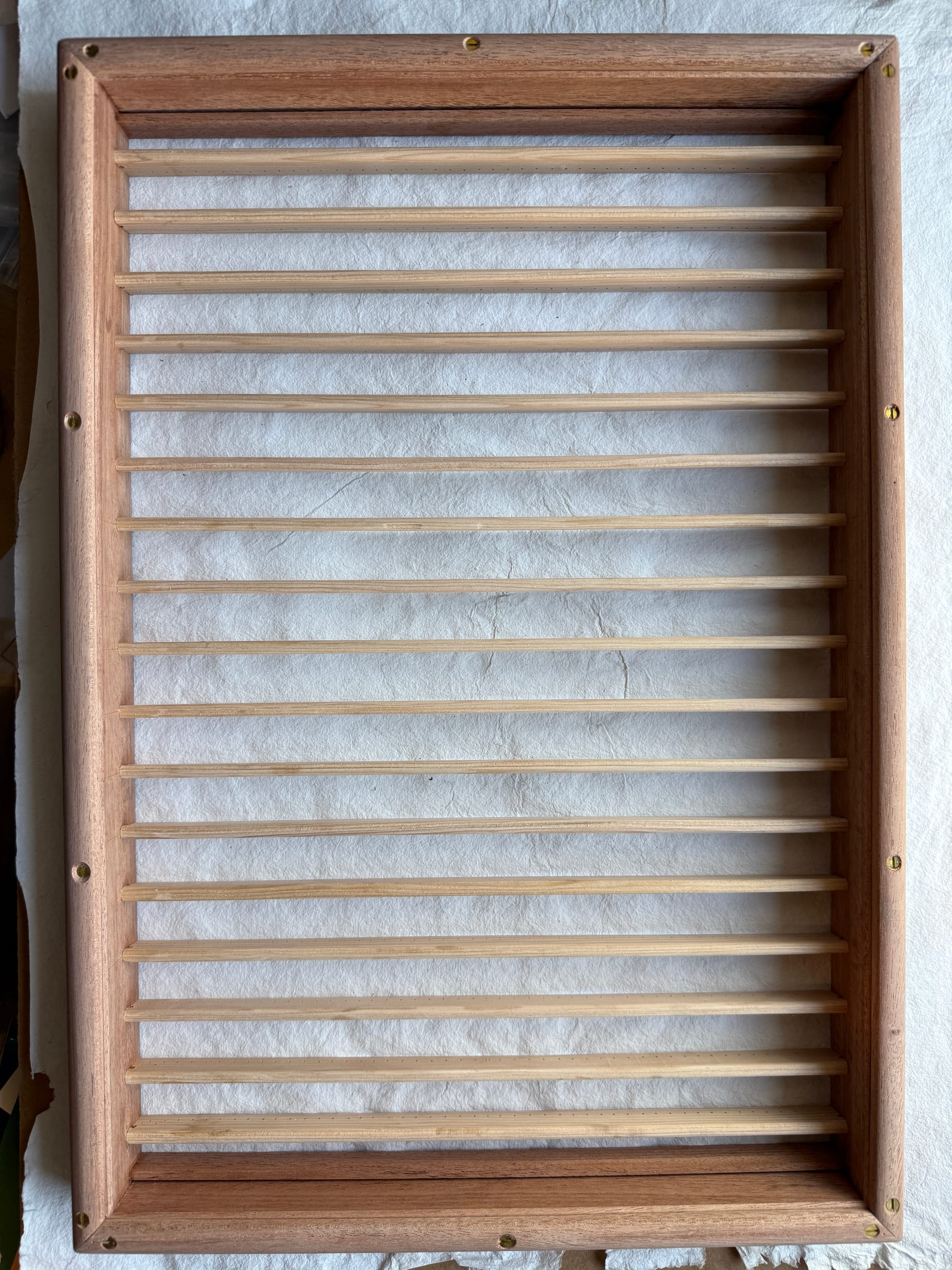
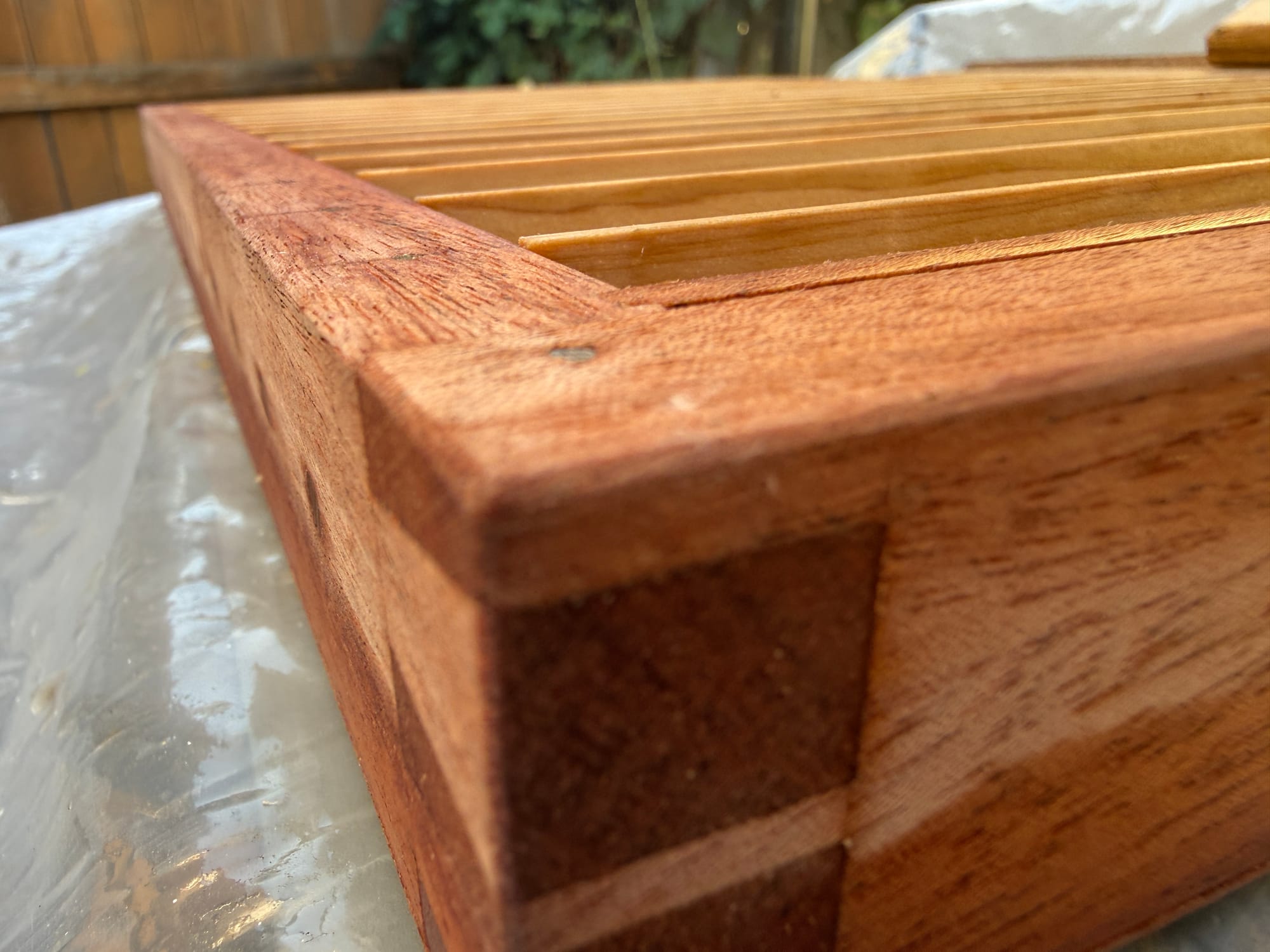
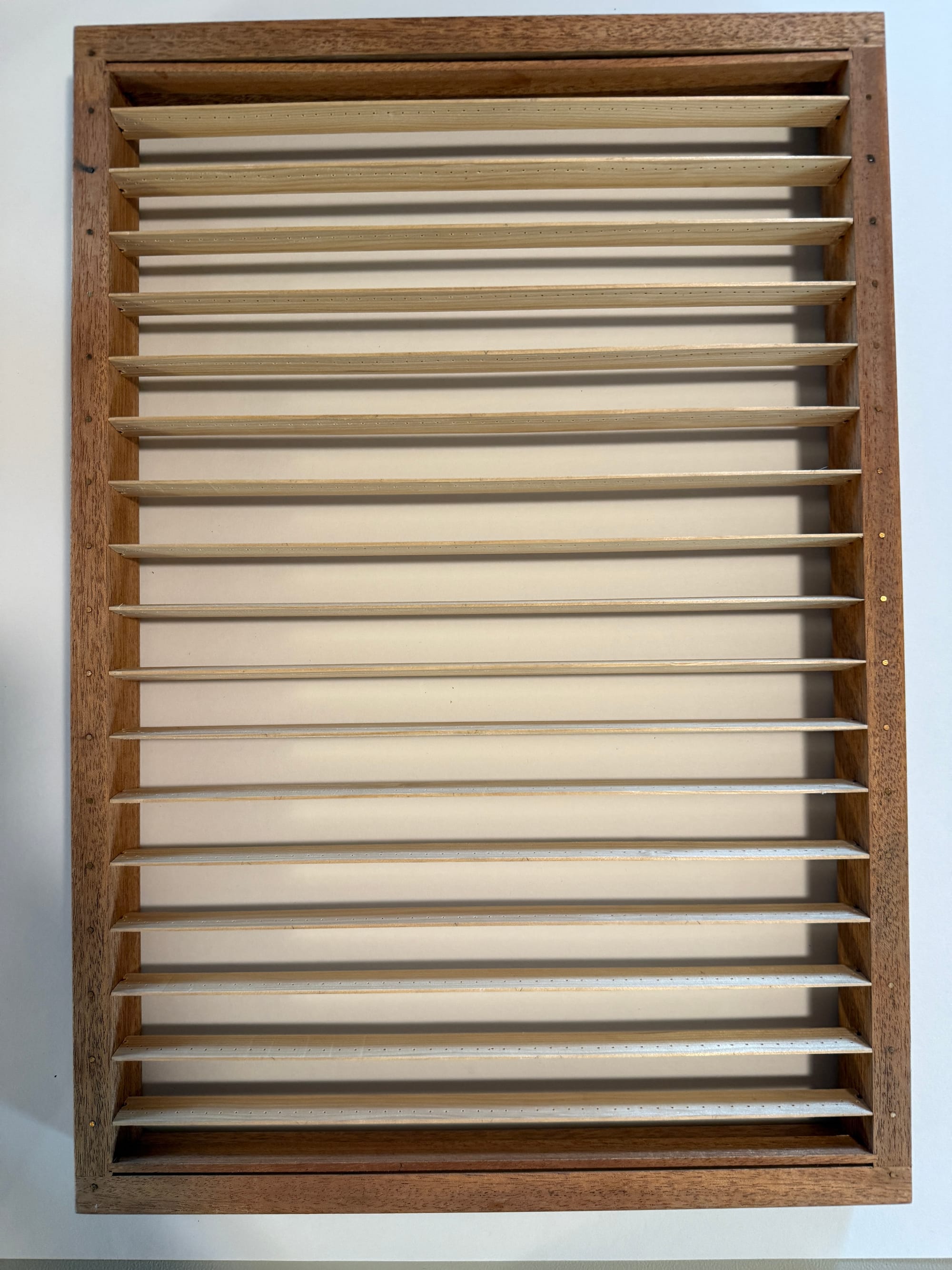
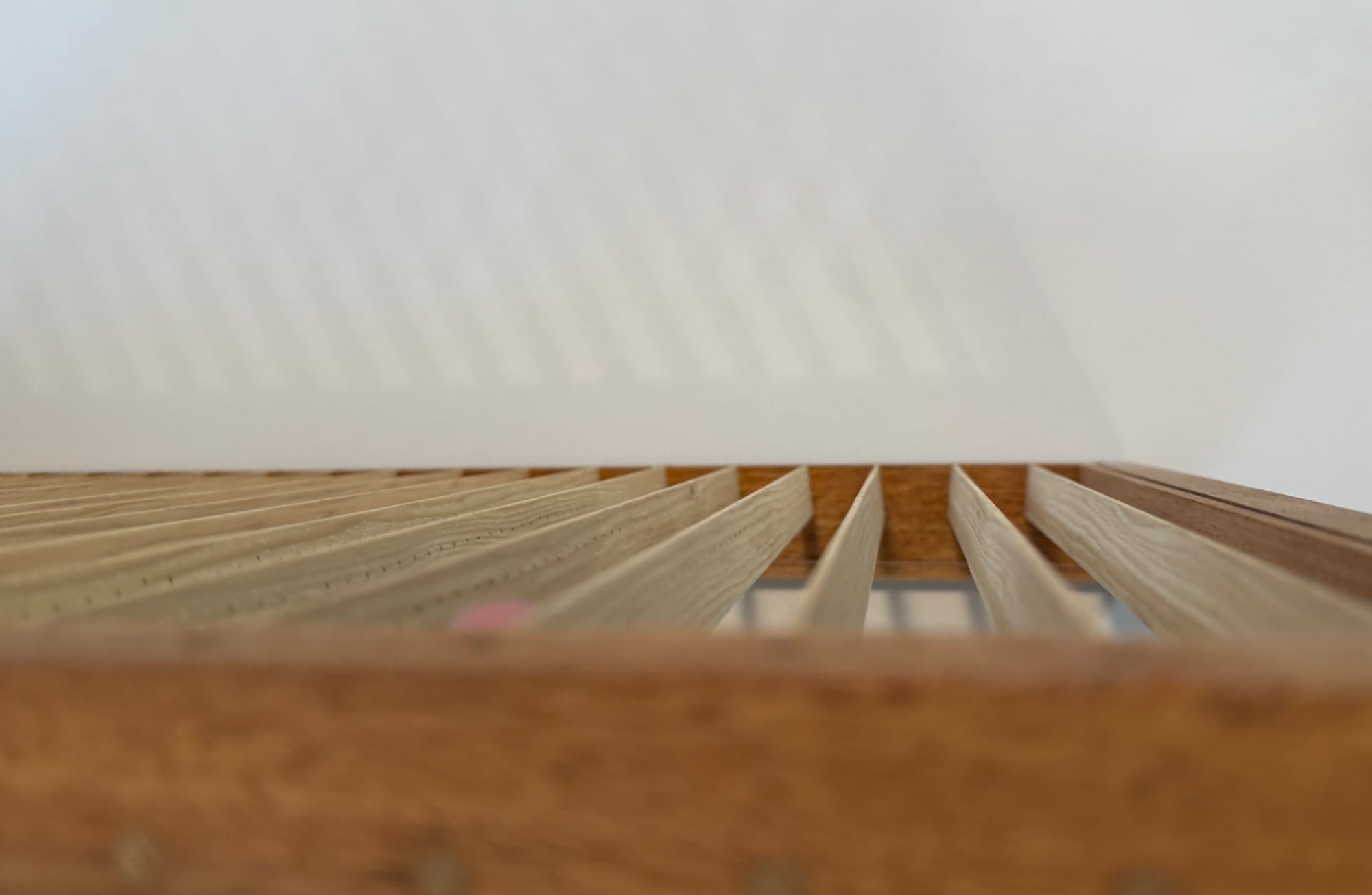
Mould made by John Jarvis 2026
In a few short weeks, John had completed the mould and shipped it to me. While the deckle still needs to be made, production ground to a halt because I made the reporting error described above. While I could have sewn the wrong cover on the mould, I think I would have been disappointed in the outcome. The solution is to have John weave a 26mm cloth when they visit Tim's next month after Canadian Thanksgiving. This will mean that I will have to manufacture my own mould for the current 28mm cloth that is in my possession. We'll just have to have 2 moulds, one deckle, and a slightly different chainline distance!
In my next post, I will speak about the structure of the offering and the reception it got at North American Hand Papermaking this past weekend in Baltimore.